Philosophy Blog a new perspective on old questions

The Meta-Problem of Consciousness
If it's all just physics, and physics doesn't account for first-person experience, then maybe the issue isn't that something extra emerges at the top—maybe it's that something is missing from the description at the bottom.
I explore the meta-problem of consciousness: why do we think there's a hard problem, and what does that tell us about the relationship between consciousness and the physical world?
Read More →
Consciousness and Emergence
A popular view is that consciousness arises from complex networks—like the intricate flight behavior of a murmuration of starlings that seems "more than the sum of its parts."
But does weak emergence explain consciousness, or do we need something stronger? I explore the distinction and why the hard problem persists.
Read More →
Russellian Monism and Panpsychism
Panpsychism is a view I've been drawn towards as a solution to the hard problem of consciousness. My interpretation: physical matter has a fundamental property of consciousness, just like mass or charge.
Russellian monism is probably the view I'm most closely aligned with these days. Physics tells us what matter does, but not what it is intrinsically. Maybe the intrinsic nature of matter is experiential.
Read More →
On Consciousness
Consciousness is the first-person subjective experience. It is the "what it's like" to be alive in each moment. As Thomas Nagel famously put it, there is something it is like to be a bat—some inner experience of echolocation and flight that we can never fully access from the outside.
I've organized questions about consciousness into four categories: distribution, origin, metaphysics, and ethics.
Read More →
Against Objective Interpretations of Moral Claims
We are naturally inclined to say certain actions or events seem wrong and evil to me because the they actually are wrong and evil. I explore interpretations of the claim "murder is evil" or "the Holocaust was wrong" and in particular conclude that we must be only making the first kind of claim about the murder or the Holocaust seeming wrong and evil.
Read More →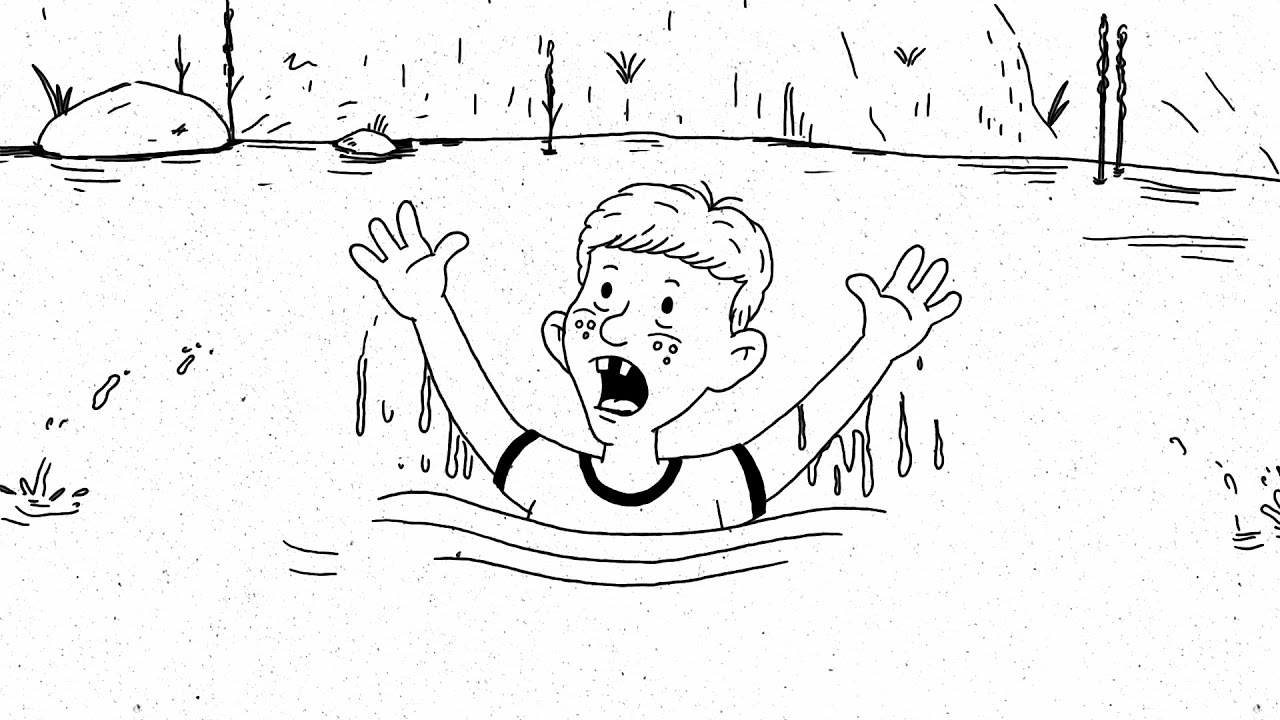
Giving
Imagine you are walking to your job or your class or other activity and notice a boy drowning in a shallow pond. The pond is maybe 2ft-3ft deep, so it would really not be very difficult for you to help, but for some reason this young boy is unable to free himself. No one else is around to help him. Now the first leap I ask you take, is that you acknowledge that there is some moral obligation to help this child.
Read More →
Defining Consciousness
Though it is difficult, pinning down what language we are using is paramount to communication. In many cases being precise in what we are talking about is the real battle.
The purpose of this article is to explore what consciousness is, however its important to first recognize how challenging, but also how vital definitions are. The ‘hardest problem of consciousness’ might just be pinning down what we mean; what concept are trying to invoke when we say the word ‘conscious.’
Read More →
AI Safety
There are many pressing concerns in AI safety. Some concerns are more reasonable than others. Some concerns are more of an existential threat than others. None have easy answers (if they did, well we wouldn’t be concerned would we?). This article will explore a laundry list of these concerns. I won’t suggest many solutions, and if I do, none of these solutions will be by any means complete. For the most part, it is my opinion that to solve these dilemmas we need to do more research, and in particular, rigorously theoretical research that focuses on bounds for the likelihood of catastrophic outcomes..
Read More →